
INSPIRING LIFELONG LEARNING
EDUCATION
Educational facilities support a wide range of activities throughout the day. Classrooms, corridors, cafeterias, libraries, and administrative offices each have unique flooring requirements shaped by how the space is used. Understanding those differences can help create environments that support learning while delivering long-term performance and value.
COMMON AREAS
FLOORING FOR SPACES THAT SUPPORT LEARNING
Different spaces support different types of learning. Explore common areas within education environments and discover the unique considerations that help guide flooring decisions.
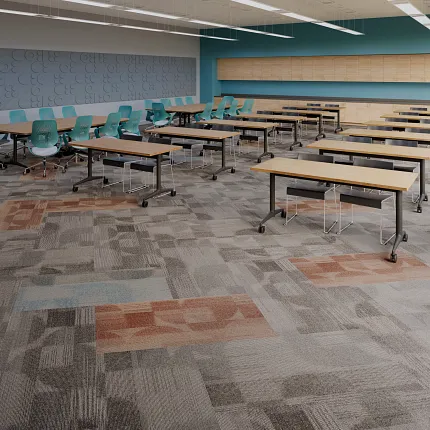
WHERE LEARNING HAPPENS
CLASSROOMS
Support focused learning with flooring solutions designed for comfort, durability, and everyday classroom activity.
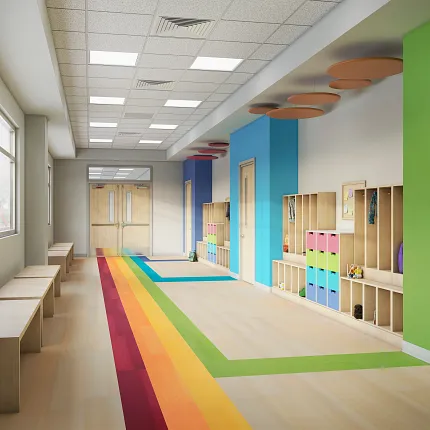
KEEPING THINGS MOVING
HALLWAYS
Handle constant foot traffic while helping students and staff move safely and comfortably throughout the school.
SUPPORTING SUCCESS
OFFICES
Create welcoming administrative spaces that balance professionalism, comfort, and long-term performance.
DISCOVER SOMETHING NEW
LIBRARY & MEDIA CENTER
Support individual study, collaboration, and quiet learning with flooring that enhances comfort and focus.
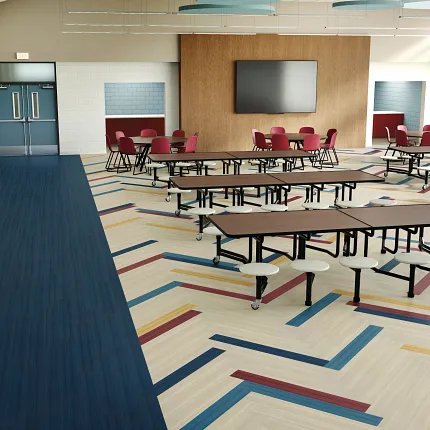
TIME TO GATHER
CAFETERIA & DINING AREA
Accommodate daily traffic, frequent cleaning, and busy meal schedules while maintaining a welcoming environment.
TAKE THE STAGE
AUDITORIUM
Provide durability and comfort for assemblies, performances, and events that bring the school community together.
BE FIRST TO KNOW
Curated Solutions for Your Next Project
Sign up to be notified when thoughtfully selected flooring combinations for this building type are available.
EDUCATION K-12
LOOKBOOK/INSPIRATION
Education Flooring FAQs
The best school flooring layers different categories by space rather than using one material throughout. Carpet tile is ideal in classrooms and libraries, where its modular, replaceable design adds comfort and sound absorption. Luxury vinyl (LVT and LVP) handles cafeterias, corridors and high-traffic zones thanks to its durability and easy cleaning, and walk-off protects the building at the doors.
They solve different problems, so most schools use both. Luxury vinyl (LVT/LVP) is the more durable, easiest-to-clean choice for cafeterias, hallways, and science or art rooms where spills and traffic are constant. Carpet tile wins in classrooms and libraries, where its modular, replaceable design cuts noise and adds underfoot comfort without requiring a full floor replacement when a section wears.
Cafeterias need a hard-surface product built for constant traffic and spills. Look for a luxury vinyl plank (LVP) with a commercial-grade wear layer and a textured, slip-resistant finish for wet servery areas- that combination cleans up fast and resists scratching from dragged tables and chairs.
Yes, and it's a strong fit for education specs. Philadelphia Commercial's soft-surface products, including carpet tile and broadloom, are Cradle to Cradle Certified®, and EcoWorx® carpet tile paired with EcoSolution Q100™ nylon (made from 100% post-industrial recycled content) offers a low embodied-carbon footprint.
It's the #1 pushback on classroom carpet, but modern commercial carpet tile is engineered for it. Carpet tile styles are built with a modular format that lets you lift and replace an individual worn or stained tile instead of redoing the whole room, and commercial-grade fibers are built for stain resistance and color retention over years of daily use.
You want soft, safe zones for play plus easy-clean surfaces for messes. Pair a cushioned carpet tile in activity and nap areas with a luxury vinyl plank (LVP) in eating and craft zones, giving you comfort where kids sit and a wipeable, spill-proof surface where they eat.